
Weekly Economic Update (June 29-July 3, 2026)

Download as a PDF
Embed Article
Copy
Weekly Economic Update (June 29-July 3, 2026)
Text LinkText Link
Quick snapshot of what this article covers:

Key Points:

The BLS employment report showed only 57K jobs were added in June while the unemployment rate fell to 4.2% from 4.3%.

  • Falling labor force participation is one reason that the pace of job creation can slow without leading to rising unemployment.
  • While participation exceeded many pre-pandemic forecasts in recent years, participation rates have fallen steadily over 2026.
  • Over the second quarter of the year, the labor force participation rate was only 0.2pp above the CBO’s January 2020 projection.

Labor Force Participation Rate
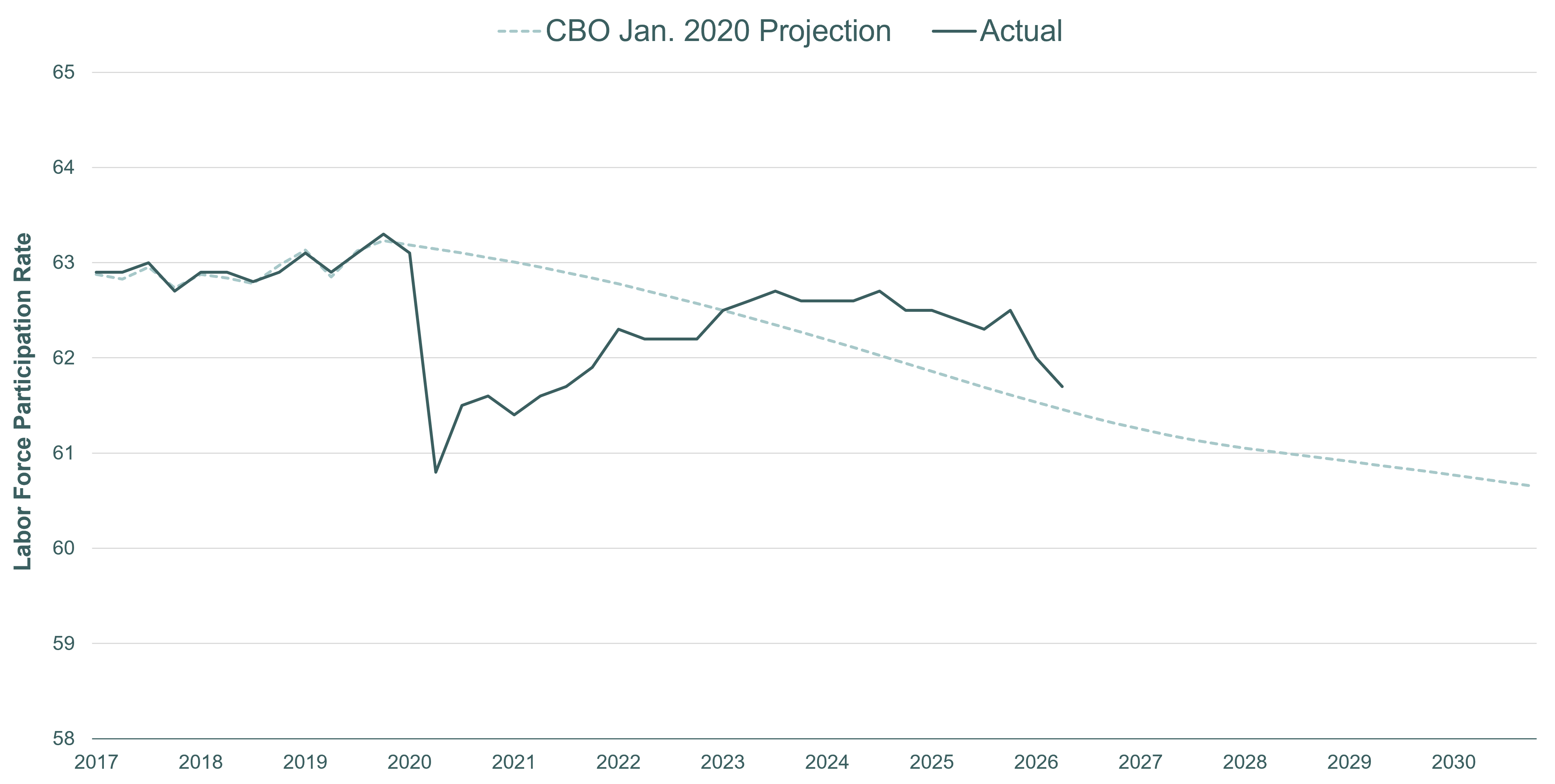
Line chart comparing the Actual Labor Force Participation Rate with the CBO Jan. 2020 Projection from 2017 to 2030. The actual rate closely follows the projection at about 63% from 2017 through early 2020, then drops sharply to approximately 60.8% in 2020 while the projection remains above 63%. The actual rate gradually recovers, reaching about 62.5% in 2023 and moving above the projection. It remains around 62% to 62.7% through 2025 before falling to approximately 61.7% in 2026. The CBO Jan. 2020 Projection declines gradually from about 63.2% in 2020 to 61.5% in 2026 and continues downward to approximately 60.7% by 2030.
Source: U.S. Bureau of Labor Statistics, Congressional Budget Office

5-year breakeven inflation, equal to the difference in yield between 5-year Treasuries and 5-year Treasury inflation protected securities (TIPS), fell to the lowest levels of the year in recent weeks as energy prices fell.

  • This measure indicates what investors expect CPI inflation will be on average over the next 5 years.

5-Year Breakeven Inflation Rate
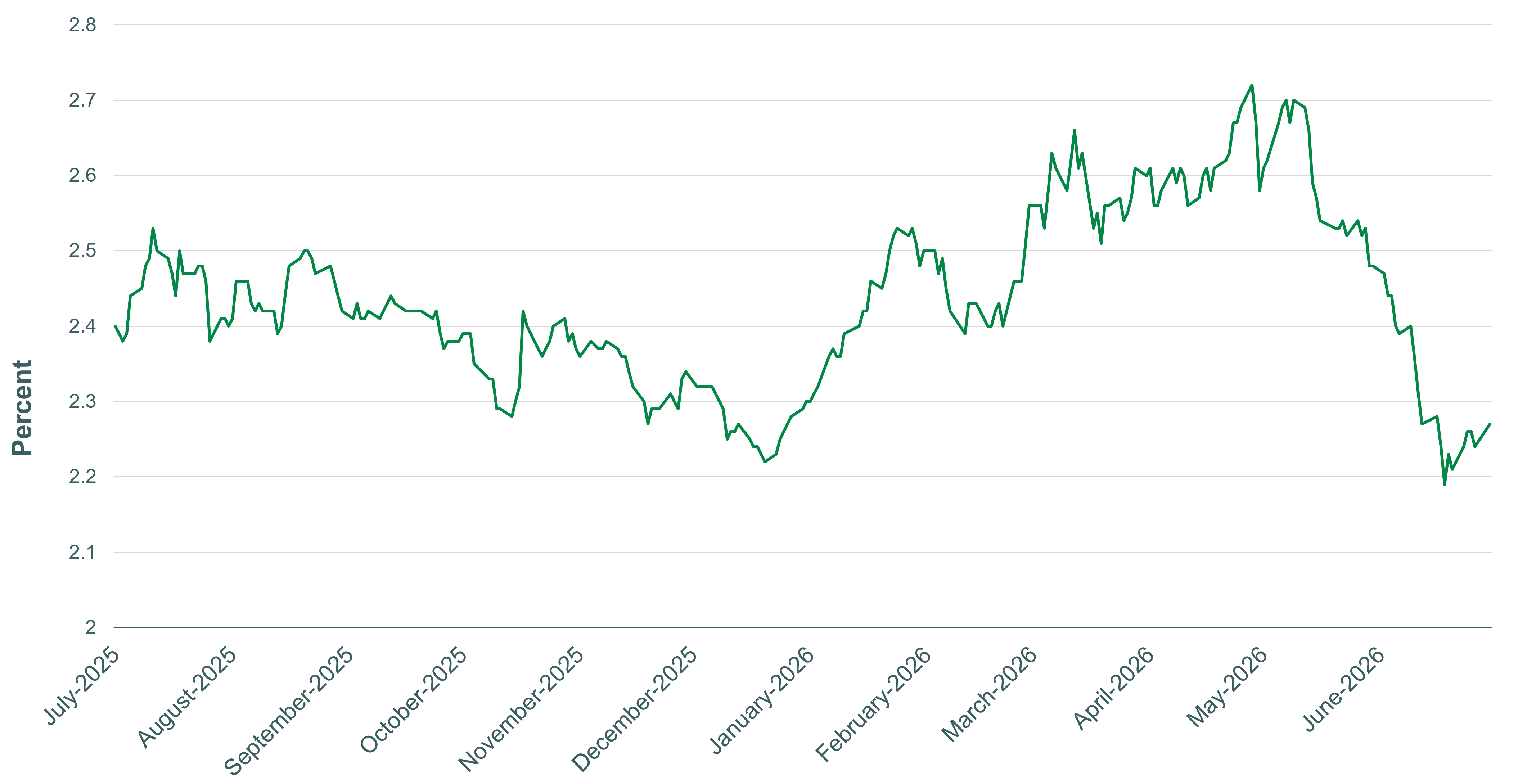
Line chart showing the breakeven inflation rate from July 2025 through June 2026, measured as a percentage. The rate fluctuates around 2.4% to 2.5% through September 2025, then generally declines to a low near 2.2% around January 2026. It rises sharply through early 2026, peaking around 2.7% in May, before declining to about 2.2% to 2.3% by late June 2026.
Source: Federal Reserve Bank of St. Louis
Share on Facebook
Share on LinkedIn
Embed Article
Copy
Embed Article

Get More Expert Insights Like This Right in Your Inbox

Get the best expertise and insights to help you navigate the mortgage and housing industries.

No spam, ever.  View our online privacy policy.